Teach the Game Before Chasing the Win
When you invite three friends over to try a game you bought, you take on an unspoken hospitality role. If you spend twenty-five minutes flipping back and forth through a glossy manual while your guests stare at upside-down card decks—and then beat them by forty points using a rule you forgot to emphasize—nobody will ask to play that game again. Teaching well is a separate skill from playing well.
The Pre-Arrival Table Checklist
Rulebooks are written as reference manuals, not teaching scripts. They start with component inventories and setup diagrams because the writer assumes nobody has opened the box yet. As the host, you should absorb that friction before the doorbell rings.
- Punch, Sort, and Pre-Bag Ahead of Time: Never ask guests to punch cardboard sheets unless they specifically enjoy the ritual. Group player-color pieces into individual bags so handing out starting kits takes ten seconds.
- Play a Two-Handed Solo Dummy Round: Moving pieces for two imaginary players through a single round exposes 90% of the small rules questions ("Wait, do spent cards go to the discard pile immediately or at the end of the turn?") before your friends are watching.
- Position the Board for Upside-Down Readers: Place text-heavy card markets along the center seam of the table where everyone can read them, and give the seat with the clearest view of the main board to the newest player, not yourself.
- Split the Bank into Dual Trays: Put two small bowls of coins and resources at opposite corners of the board. Reaching across four people's drinks every ninety seconds quietly drains table energy.
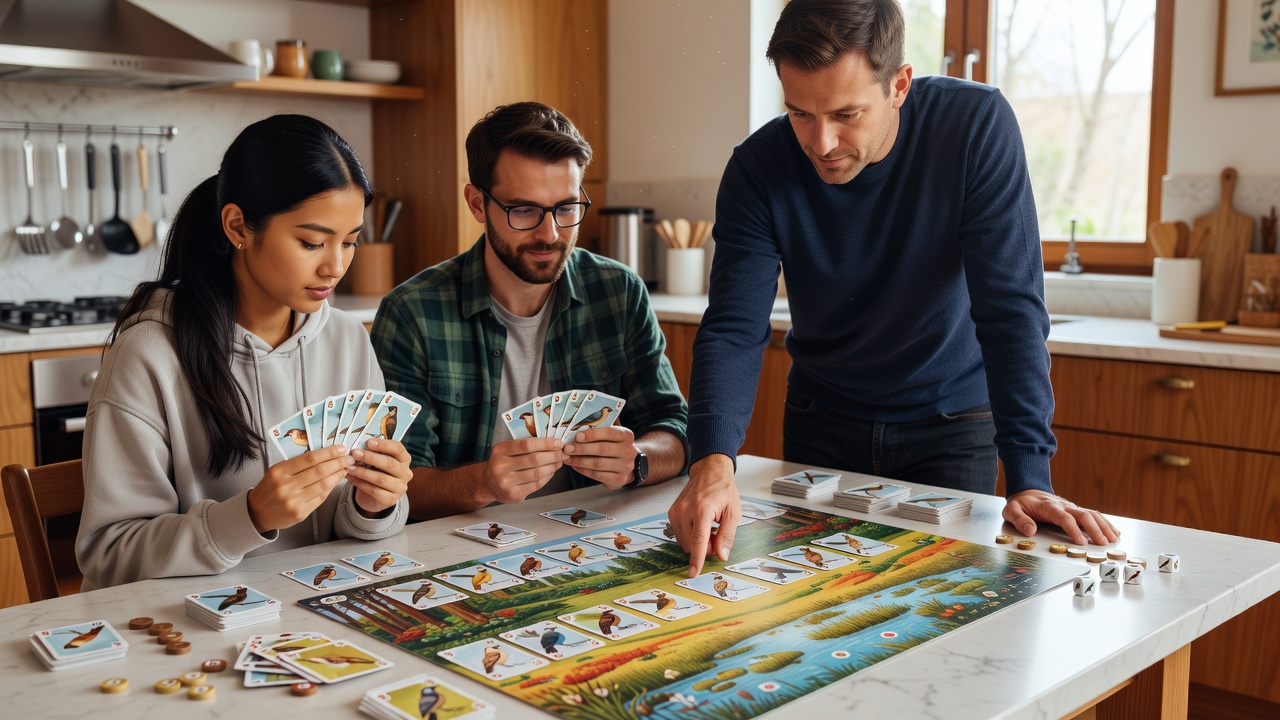
The Five-Step Teaching Script
Adult learners cannot retain rules details until they have a mental hook to hang them on. If you start by explaining how wheat converts into bread before anyone knows why bread matters, your guests will nod politely and forget everything. Follow this strict sequence instead:
1. The Goal & Identity (30 Seconds)
Start with one concrete sentence: "We are competing spice houses on Arrakis, and the first person to reach 10 victory points on this track—or whoever has the most at the end of Round 10—wins the game." Touch the actual victory track with your finger so everyone's eyes lock onto the finish line.
2. How the Game Ends (45 Seconds)
Before explaining a single action, state what triggers the end of the night. Is it a fixed number of rounds (like Agricola or Wingspan), or is it a player-driven race (like emptying three supply piles in Dominion or placing your final house in Concordia)? Knowing whether the clock is fixed or flexible shapes every decision that follows.
3. Your Turn Structure (3 Minutes)
Hand every player their reference card and walk through what a single turn looks like from start to finish. Use physical pieces to demonstrate. In Elizabeth Hargrave's Wingspan, for example, you say: "On your turn, you do only one of four things: play a bird card from your hand, or slide an action cube from right to left along one of these three habitat rows to gain food, lay eggs, or draw cards."
"Never explain a rule exception during the first five minutes if you can simply hold that card out of the deck until Round Two, or point it out when it actually appears face-up." The Golden Rule of Low-Friction Hosting
4. What Good Early Play Looks Like (60 Seconds)
Do not tell players what strategy to pick, but do warn them about common first-round traps that feel bad. In Agricola, tell them plainly: "At the end of Round 4, you must feed every person in your house two food tokens, or take a permanent -3 Begging Card." In Brass: Birmingham, remind them: "Taking a £30 loan in the first two rounds is normal, not a sign that you are losing."
5. Take the First Turn Yourself
Unless going first carries a massive tactical advantage, make yourself the starting player in a teaching game. Narrate your first turn aloud: "I am playing this card to place my worker here, paying two wood from my supply, and taking this tile." Seeing one live turn dissolves half the confusion at the table.
First-Round Walkthroughs for Three Classic Engines
Teaching Concordia (Mac Gerdts) in 4 Minutes
Ignore the end-game Roman god scoring math during setup! Simply tell players: "On your turn, play one card from your hand and do exactly what the sentence says. The Architect moves your colonists and builds brick houses; the Prefect produces goods from a province; the Tribune picks all your played cards back up into your hand." Only after everyone has played their first Tribune card to reset their hand should you explain how Jupiter, Saturnus, and Minerva multiply their houses at the end of the night.
Teaching The Crew: Mission Deep Sea (Thomas Sing)
Before dealing a single task card, play one open-hand practice trick with zero mission cards on the table. Confirm that every adult understands two rules: you must follow the led color if you hold it, and the numbered submarine trump cards (1–4) beat any colored 9. Once that thirty-second hand finishes, introduce the cooperative task tokens and the single green communication token.
Handling Mid-Game Rules Lookups
When an ambiguous card interaction crops up in Round 3, set a ninety-second timer on your mental clock. Look in the index first. If you cannot verify the exact publisher FAQ within ninety seconds, propose a fair binary interpretation to the table, ask for a quick thumbs-up, and keep playing. Look up the official ruling after everyone goes home, and share a quick note at the start of next week's session. Explore how different rule systems interact on our Mechanics page, or check Table Questions for more etiquette solutions.